

By Ado Salisu
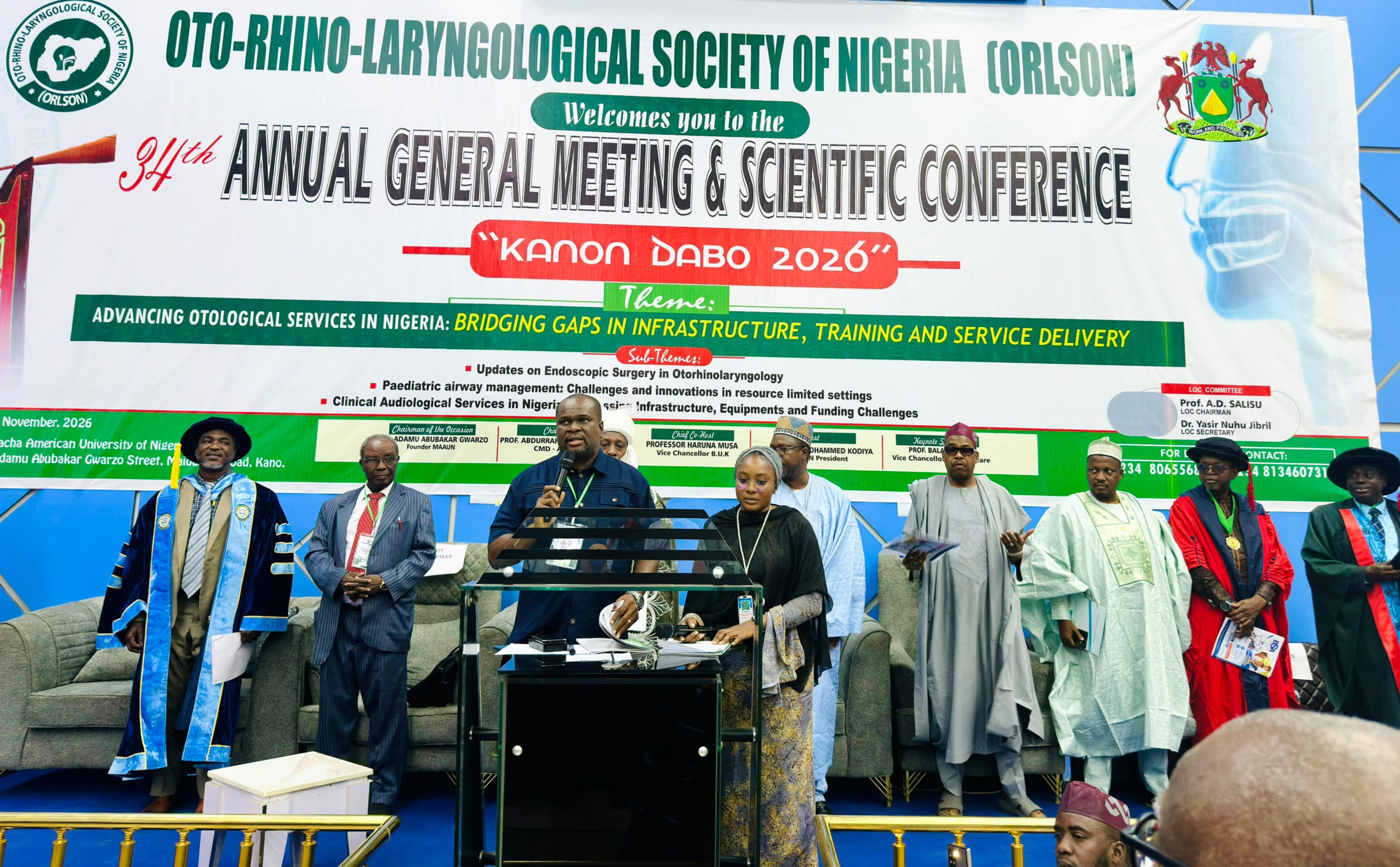
The National President of the Oto-Rhino-Laryngological Society of Nigeria (ORLSON), Professor Aliyu Mohammad Kodiya, has described inadequate infrastructure, limited funding, shortage of trained personnel, poor geographical distribution of services and high cost of specialised care as factors undermining the progress of the society.
Professor Kodiya stated this during the 34th Annual General Meeting and Scientific Conference tagged: “Kano Dabo 2026” with the theme: “Advancing Otological Service in Nigeria; Bridging Gaps in Infrastructure, Training and Service Delivery” held in Kano.
According to him, globally, advances in endoscopic ear surgery, cochlear implantation, audiological diagnostics and hearing rehabilitation have revolutionised otological practice, yet, for millions of Nigerians, access to these innovations remains a distant aspiration.
He further explained that the consequences are profound, as untreated hearing impairment affects communication, childhood development, education, employment, social participation and quality of life.
“Firstly, the infrastructure gap. Modern otological practice requires functional diagnostic facilities, well-equipped operating theatres, reliable audiological equipment and sustainable maintenance systems. We must move beyond occasional equipment procurement to deliberate investment in comprehensive and sustainable service delivery.
“Secondly, the training gap. Nigeria urgently needs more otorhinolaryngologists, audiologists and hearing rehabilitation professionals. We must expand specialist and subspecialty training, mentorship, continuing professional development and skills transfer, while addressing workforce retention and equitable distribution. Training specialists without providing the facilities and environment in which they can function effectively limits the benefits of that investment,” he explained.
While appreciating stakeholders and partners for their commitment and support, he urged the government to do more in order to actualise the set objectives.
Earlier in his welcome address, the Chairman of the Local Organising Committee (LOC), Professor Abubakar Danjuma Salisu, said the conference would deliberate on the realities of Nigerian hospitals and confront the most pressing systemic gaps, while also keeping sight of modern ORL practice.
Professor Salisu commended all those who have contributed in one way or the other towards the success of the programme.
In his remarks, the Kano State Commissioner for Health, Dr. Abubakar Labaran Yusuf, highlighted the achievements recorded in healthcare delivery under the present administration of Governor Abba Kabir Yusuf.
He said the state government constructed various healthcare facilities across the state and employed hundreds of health workers aimed at improving the quality of the healthcare system in the state.
On his part, the Chief Co-host and Vice Chancellor of Bayero University Kano (BUK), Professor Haruna Musa, said his institution has introduced programmes and improved other facilities aimed at contributing to the development of the healthcare system in the country.
Speaking also, the Emir of Kano, Malam Muhammadu Sanusi II, represented by Alhaji Abdullahi Idris Bayero, said the Emirate Council will continue to support and partner with relevant bodies in order to achieve the desired objectives.
