

By Lurwanu Idris Malikawa
The Kano State Government has appealed to the European Union (EU) for enhanced collaboration in education, economic development, agriculture, healthcare, climate action and infrastructure as part of efforts to accelerate sustainable development and improve the livelihoods of residents.
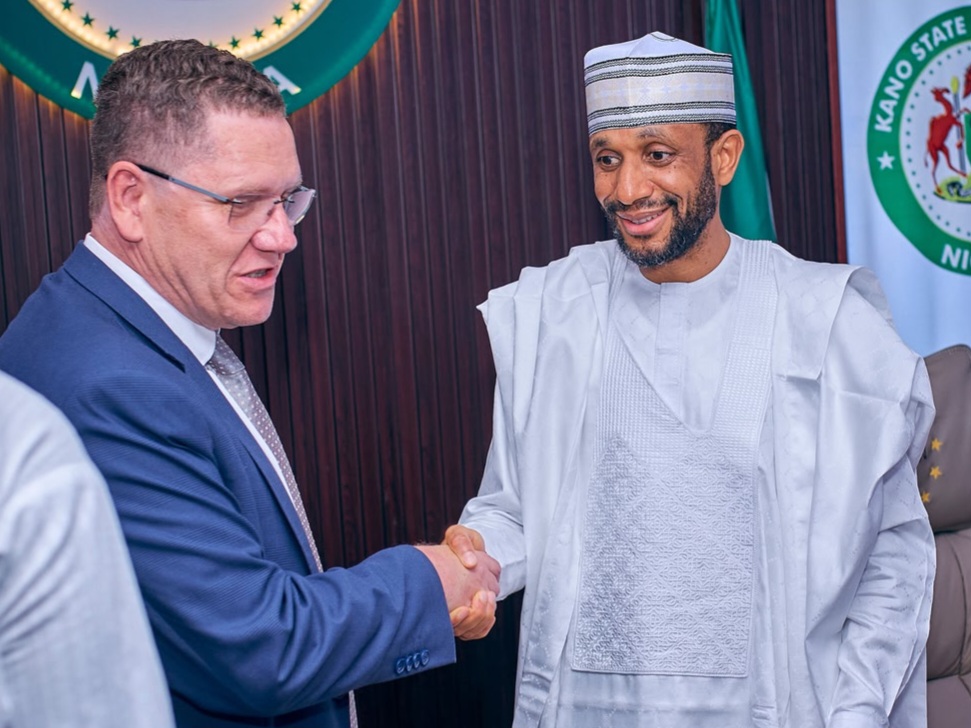
The appeal was made on Monday by the Deputy Governor of Kano State, Alhaji Aminu Abdussalam Gwarzo, who represented Governor Abba Kabir Yusuf during the presentation of the state’s Urban Development Strategy to ambassadors and representatives of EU member states in Kano.
Speaking at the engagement, the deputy governor described Kano as one of Africa’s oldest and fastest-growing commercial centres, stressing that strategic partnerships with international development partners remain critical to addressing the challenges and opportunities associated with rapid urbanisation.
He called for increased EU support in education and skills development through investments in educational infrastructure, teacher training, vocational education and digital learning initiatives.
According to him, the state is also seeking scholarship and exchange opportunities for students and professionals to strengthen human capital development.
Gwarzo further appealed for collaboration in promoting economic growth and youth employment through investments in small and medium-sized enterprises (SMEs), entrepreneurship development programmes and innovation hubs capable of creating sustainable jobs for young people.
He also requested EU support in the review and validation of Kano State’s draft sub-national Public-Private Partnership (PPP) policy to ensure it aligns with the state’s economic realities and development aspirations.
In the agricultural sector, the deputy governor sought support for modern agricultural technologies, irrigation systems, value-chain development, livestock development and capacity-building programmes for farmers.
He noted that assistance in climate-smart agricultural practices would significantly improve food security, agricultural productivity and resilience against environmental challenges.
The state government also appealed for assistance in strengthening healthcare systems, including maternal and child health services, disease prevention programmes and access to essential medical resources.
On environmental sustainability, Gwarzo called for support in tackling desertification, environmental degradation, renewable energy development and climate adaptation initiatives aimed at protecting vulnerable communities and promoting sustainable growth.
He further highlighted the need for partnerships that would promote sustainable infrastructure, clean energy solutions and digital connectivity to accelerate economic development and modernise public services.
The deputy governor also presented Kano State’s Urban Development Strategy, describing it as a comprehensive framework designed to promote sustainable urban growth, climate resilience, improved infrastructure, economic competitiveness and better living standards for residents.
He expressed confidence that stronger cooperation between the EU and the Kano State Government would foster shared prosperity, social stability and sustainable development while deepening relations between both sides.
Gwarzo urged the EU to consider Kano a strategic partner for development initiatives and investment opportunities, noting that such collaboration would advance the common goals of peace, progress and human dignity.
Earlier, the European Union Ambassador to Nigeria, Gautier Mignot, who led the delegation, expressed appreciation for the warm reception accorded to the team in Kano, describing the visit as a demonstration of the EU’s commitment to strengthening cooperation with the state.
Mignot said the delegation, comprising ambassadors and representatives from eight EU member states, selected Kano for its annual diplomatic visit because of the state’s strategic importance as a major development hub for Northern Nigeria and the wider Sahel region.
He said the choice underscored the importance the EU attaches to its partnership with Kano and its recognition of the opportunities available for deeper cooperation in development, investment and economic growth.
The ambassador highlighted the strong economic relationship between Nigeria and the European Union, noting that the EU remains Nigeria’s largest trading partner and the leading market for the country’s non-oil exports.
According to him, the partnership is backed by significant investments, with EU countries accounting for about one-third of foreign direct investment in Nigeria, alongside development interventions focused on job creation, youth empowerment, women’s inclusion, sustainable development and infrastructure growth. :::
