

By Our Correspondent
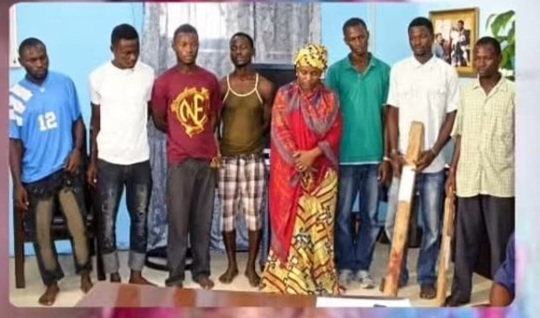
Salamatu Karim, also known as “Mother”, was convicted of abetting the murder of her husband, Abdul Karim, after prosecutors told the court that she helped arrange his killing as part of a plan to marry a white man living in the United States.
The case began on June 15, 2013, when Abdul was killed at the couple’s residence at ACP Estates, near Pokuase, Ghana.
According to police investigations, Salamatu had allegedly contacted her brother, Awudu Alhassan Sulemana, also known as “Dozer”, about four months before the killing and told him about her relationship with the American-based man.
Investigators said Salamatu believed her husband’s presence could prevent her from marrying the man if he came to Ghana.
She also reportedly complained to her brother that Abdul subjected her to severe beatings.
The plan
According to the prosecution, Awudu subsequently recruited Mohammed Sulemana, known as “Banana”, and Kofi Nyagbedzi to assist in killing Abdul.
Police investigations established that the men were allegedly promised GH¢1,000 for the job.
On June 15, the men were transported from Dodowa to Salamatu’s residence at ACP Estates.
Investigators said Salamatu admitted them into the house and concealed them in the bathroom with clubs and pieces of wood while they waited for Abdul to return.
She was also alleged to have mixed diazepam, commonly known as Valium, with her husband’s food in an attempt to make him weak or fall asleep.
How the killing happened
After Abdul returned home and ate the food, he became weak, according to the account presented by investigators.
Salamatu then allegedly called the men out of the bathroom.
The men attacked Abdul, leaving him with a fractured skull, fractured jaw and other serious injuries.
He was taken to hospital but was pronounced dead.
After the attackers left, Salamatu reportedly raised an alarm and called the police at about 9:35 p.m.
She initially told investigators that unknown robbers had entered the house and killed her husband while she was bathing.
Police breakthrough
Three days later, on June 18, 2013, police received information that a group of suspected robbers was preparing to attack a hotel at Adenta.
Several suspects were arrested at the hotel.
During the operation, one of the suspects received a telephone call from Kofi, who wanted to know whether the robbery had been successful.
Police instructed the suspect to tell Kofi that the operation had succeeded and to invite him to the hotel to collect his share.
Kofi arrived and was arrested.
While being questioned about the robbery operation, he allegedly provided information linking himself, Salamatu, Awudu and Mohammed to Abdul’s killing.
Police subsequently traced Awudu and Mohammed to Dodowa, where they were arrested.
According to the prosecution, both men gave statements admitting their involvement and implicating Salamatu in the planning and facilitation of the killing.
A taxi driver also approached the police after hearing about the case in the media. He reportedly identified Salamatu as the person who hired him to transport the men from Dodowa to her residence on the day Abdul was killed.
Salamatu denied contracting the men to kill her husband.
Arrest and court proceedings
Salamatu, Awudu, Mohammed and Kofi were arrested and later arraigned before the Osu Magistrate Court, which remanded them in custody while investigations continued.
The case was subsequently transferred to the High Court in Accra for trial.
Awudu was charged with murder and conspiracy to commit murder.
Mohammed was charged with conspiracy to commit murder, while Salamatu faced a charge of abetment of murder.
All three pleaded not guilty.
Confession statements challenged
During the trial, Awudu and Mohammed challenged the confession statements attributed to them.
They alleged that the statements had been obtained through beatings, electric shocks, threats and other forms of coercion.
On December 1, 2015, the High Court ordered a separate hearing to determine whether the statements had been made voluntarily.
After hearing evidence from the prosecution, the accused persons, the investigating officer and an independent witness, the trial judge ruled on December 17, 2015, that the statements had been made voluntarily and admitted them into evidence.
First appeal
Awudu and Mohammed appealed against the decision to admit their confession statements while the murder trial was still pending.
On July 28, 2016, the Court of Appeal dismissed the appeal.
The court held that the statements had been properly recorded in the presence of an independent witness and allowed the trial at the High Court to continue.
High Court conviction
At the conclusion of the trial, a jury unanimously found the three accused persons guilty.
Awudu was convicted of murder and conspiracy to commit murder.
Mohammed was convicted of conspiracy to commit murder, while Salamatu was convicted of abetment of murder.
All three were sentenced to death.
The published judgments primarily dealt with the planned killing, the confession statements, the medical evidence and the respective roles of the three convicted persons.
However, details concerning the alleged white boyfriend in the United States, the specific GH¢1,000 payment, the use of Valium and the taxi driver’s account were not separately discussed in detail in the published judgments I reviewed. Those details appeared in accounts attributed to the police investigation and the original media briefing on the case.
Court of Appeal upholds convictions
Salamatu, Awudu and Mohammed subsequently appealed their convictions and sentences.
On November 15, 2018, the Court of Appeal dismissed the appeal and affirmed the High Court’s decision.
The court upheld the admission of the confession statements and found that the jury had been properly directed and that the evidence supported the convictions.
Supreme Court appeal
The three convicts later appealed to the Supreme Court on 13 grounds.
Their grounds of appeal included challenges to the confession statements, the credibility of prosecution witnesses, the directions given to the jury, the evidence relating to conspiracy and abetment, and the sentences imposed on them.
On July 29, 2026, a five-member panel of the Supreme Court unanimously dismissed the appeal.
The Supreme Court held that the confession statements had been properly admitted and were supported by other evidence, including Kofi’s testimony, medical findings and the circumstances surrounding the killing.
The court concluded that the prosecution had proved beyond reasonable doubt that the killing had been planned, that Awudu and Mohammed participated in it, and that Salamatu intentionally facilitated the crime.
The convictions and death sentences were consequently affirmed.
What happened to Kofi?
The available published judgments reviewed for this report do not clearly establish what happened to Kofi Nyagbedzi or the other suspects who did not feature in the final judgment.
There is also no reliable information identified in the reviewed material establishing the outcome of Kofi’s separate robbery-related case.
The case therefore began with a report of an alleged robbery and the killing of Abdul Karim by supposed unknown assailants.
Police investigations arising from an unrelated robbery case subsequently produced information that linked the victim’s wife and other suspects to the killing.
The courts eventually found Salamatu, Awudu and Mohammed criminally responsible for the murder-related offences and upheld their convictions through the Supreme Court.
