

Sunusi Abdullahi K naisa
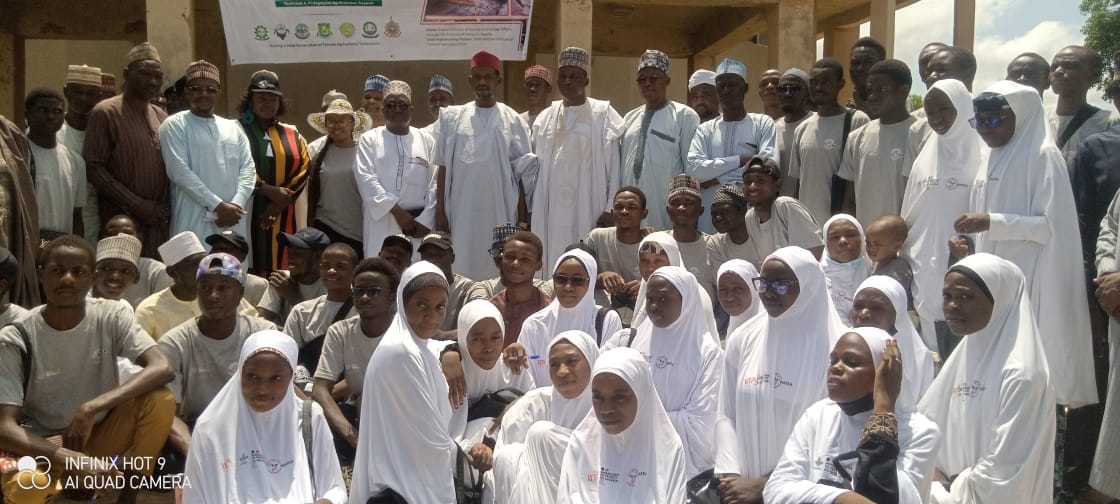
The French Ministry of Europe and Foreign Affairs, in collaboration with the International Institute of Tropical Agriculture (IITA) has launched a agribusiness training program for 500 students at Audu Bako College of Agriculture in Dambatta, Kano State, on Wednesday.
This initiative is part of the Women in Agricultural Technical Education and Apprenticeship (WATEA) program, primarily aimed to empower women, with 80% of participants being female.
At the commissioning of the project, the state Commissioner for Higher Education, Dr. Yusuf Ibrahim Kofarmata, described the program as significant in empowering women and youth for self- reliance. He urged the participants to apply the knowledge gained during the training for future endeavors.
The event took place on Monday at the Audu Bako College of Agricultural Development, Danbatta. Dr. Kofarmata encouraged the participants to make the best use of this opportunity to become agricultural entrepreneurs. He emphasized that, given the current situation in Nigeria, it is crucial for women to explore agricultural potential and engage in modern agricultural development. Stressing that, in the next 20 years, numerous opportunities will arise in the agricultural sector and called on the participants to aim for self-reliance and entrepreneurship in agriculture.
Dr. Kofarmata commended WATEA for initiating the program and selecting Kano State’s Audu Bako College of Agriculture, expressing confidence that it will significantly contribute to the development of young women and enhance the socio-economic well-being of society.
The commissioner also stated that the project comes at the right time and emphasized that it aligns with the Kano State government’s current administration, under the leadership of Abba Kabir Yusuf, in its efforts to empower youth, particularly women, to improve their lives.
Speaking at the event, the State Desk Officer, Munirat Jibril, explained that the aim of the project is to train young female technicians in modern agricultural techniques, production, and farm management, with a focus on agroecology, biodiversity, and environmental sustainability.
She further explained that the three-year WATEA project will train at lest 3000 youth, mainly women from six pilot states in Nigeria. She said 500 participants, with 80 percent being female and 20 percent male would be train in two-month programme as first phase on agricultural development which is now flagged up.
The six pilot states, organized into three regional clusters based on strategic geographic location: the Southwest (Kwara and Oyo States), the Southeast (Anambra and Enugu States), and the North (Kano and Jigawa States).
Jibril also highlighted the value of the WATEA project, including collaboration with the French institutional network to modernize agricultural technical education programs and initiate a mobility program for Nigerian teachers and students to travel to France. The program will also support the new generation of agripreneurs and establish an exhibition and sales venue for Nigerian agricultural products among others.
In his welcome address, the Provost of Audu Bako College of Agricultural Development, Professor M.A. Wailare, highlighted the longstanding relationship between the college and the French government. He promised continued collaboration in agricultural development, research, and education. Prof. Wailare thanked Kano State Governor Abba Kabir Yusuf for his unwavering support in uplifting education in the state.
Addressing the trainees, Prof. Wailare urged them to take their responsibilities seriously and dedicate themselves to learning. “This training is extremely important and will prepare you for the future. There are many opportunities around you, and it will make you more relevant in society,” he stated.
Also speaking at the event, the representative of the Emir of Kano at Makoda, Abba Wazirin Koguna, thanked the lead implementation partners for initiating the project and urged the participants to apply what they have learned in their respective communities.
