

By Sa’id Husain Abdullah (Kwajale-Sumaila)
I read Dr. Nafisa Baba-Ahmed’s reflection on the passing of Alhaji Aminu Dantata with deep interest and concern. Her piece, “The Billionaire Who Left Kano Behind,” is articulate, heartfelt, and ostensibly born out of love for community and concern for justice. But while her voice deserves attention, her critique of the late elder statesman’s burial calls for a quick response—one anchored in religious clarity, cultural sensitivity, and fairness.
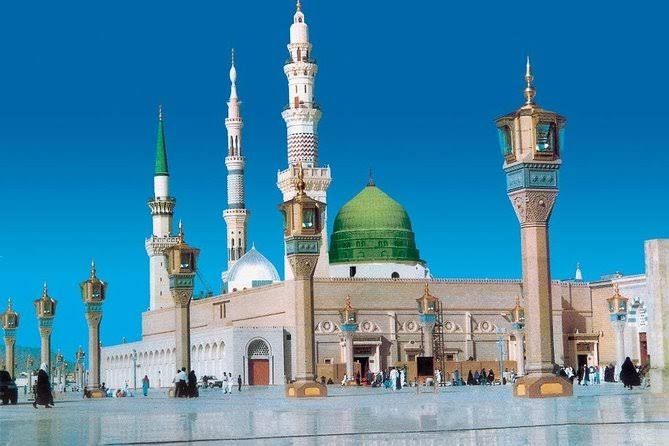
Let us begin with the truth: being buried in Madinah is not a betrayal of one’s people—it is a fulfillment of one’s spiritual longing.
Dr. Nafisa is right to say that public figures carry weight even in death. But when we begin to measure the spiritual wishes of the dead against the emotional expectations of the living, we risk crossing a line where sacred intention is judged through secular emotion.
1. Burial in Madinah Is Not a Class Statement—It Is a Spiritual One.
The Prophet Muhammad ﷺ said:
_“Whoever dies in either Makkah or Madinah, I will intercede for him on the Day of Judgment.”_
(Musnad Ahmad, with Hasan chain)
The love for Madinah is not the monopoly of the rich—it is the yearning of believers across class, colour, and culture. Yes, only a few can access it, but that does not make the act arrogant. If Allah grants someone both the means and the pious intent to be buried in a city loved by His Messenger, shall we frame it as abandonment?
Spiritual access is not always social inequality. It may be divine favour—one that we ought to admire, not resent.
He was not alone in this longing. Several prominent Muslims have made similar requests, seeking to be buried in Madinah regardless of where they died. Muhammad al-Badr, the last Imam and King of Yemen, passed away in London in 1996 and was buried in Madinah. Zine El Abidine Ben Ali, former President of Tunisia, died in Jeddah in 2019 and was also buried in the city of the Prophet ﷺ. And now, Alhaji Aminu Alhassan Dantata—who passed away in Abu Dhabi on Saturday, 28th June 2025—joins this line of believers whose final request was to lie close to the Prophet ﷺ. Their families sought permission from the Kingdom of Saudi Arabia to honour these deeply spiritual wishes. These are not acts of pride—they are acts of reverence.
2. The Earth of Islam is One: Burial Is Not Always a Statement of Nationalism
Islam is not tribal. Islam is not national. Islam is not bound by flags and borders. Our ummah is global, our graves are not tied to hometowns. The Prophet ﷺ said:
> “The whole earth has been made a place of prostration and purification for me.”
(Sahih Muslim)
To say Dantata “left Kano waiting” implies his soul owed the city something even in death. No. He gave Kano his life—his wealth, his work, his wisdom. That is where obligation ends. Where to rest one’s bones is not a debt to society, but a personal journey between the soul and its Lord.
Let us remember: the Prophet ﷺ did not return to Makkah to be buried. He remained in Madinah, the city of his mission. So if a man, after living fully for his people, desires to lie near the Prophet, why do we measure that against post-colonial notions of cultural geography?
3. Accountability Is for the Living—Not the Location of the Dead.
Dr. Nafisa speaks of “final accountability” being lost when leaders are buried abroad. I humbly differ. Accountability before Allah is not tied to graveyards. The talakawa do not need to watch a body lowered to hold leaders accountable. That is the work of conscience, of courts, of God—not of cemetery rituals.
Let’s not equate burial proximity with social justice. Justice is how you live, not where you’re buried.
4. Aminu Dantata’s Life Was His Testimony
He built, gave, educated, employed, and uplifted—not just in Kano, not just in Nigeria, but across borders and continents. From schools to humanitarian initiatives, his generosity transcended geography. Generations across Africa and beyond have benefitted from his quiet but far-reaching philanthropy. If his final wish was to be buried near the Prophet ﷺ, that does not erase a lifetime of global service. It completes it.
Cultural belonging ends at the grave. Spiritual belonging begins there.
Final Thought.
Dr. Nafisa is right that we must talk about faith, power, and legacy. But we must do so without letting resentment obscure reverence. We can ask questions without projecting guilt. We can love Kano without accusing Madinah.
Let the man rest.
The Prophet ﷺ said:
> “When a person dies, all their deeds end except three: ongoing charity, knowledge that benefits, or a righteous child who prays for them.”
(Sahih Muslim)
Alhaji Aminu Dantata leaves behind all three. That is where our focus should be—not where his body lies, but what his life left behind.
May Allah forgive him, accept his longing, and grant him Jannah al-Firdaws.
