

By Aliyu Ahmad
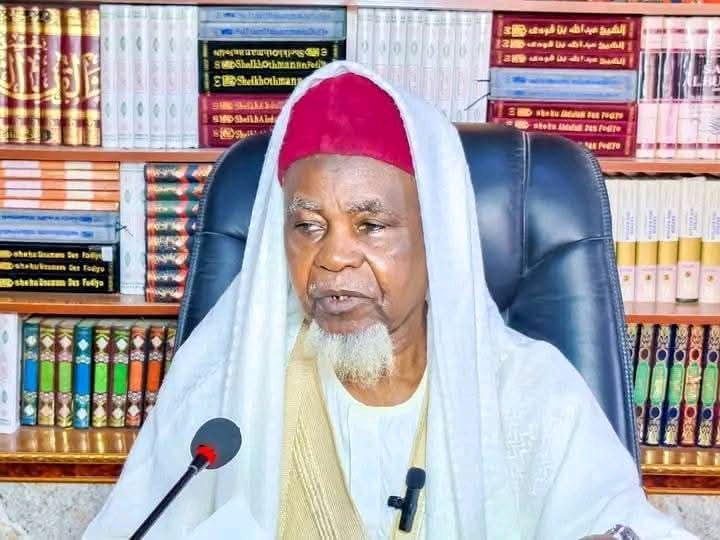
“I am a former soldier, a Colonel who devoted 35 years of his life to the military. But my journey into the army did not begin in a barracks—it began in a humble Qur’anic school.
At that time, I was living in the palace of His Royal Highness, the Emir of Gombe, studying the Qur’an as a young student. Then the Nigerian Civil War—known as the Biafran War—broke out. Soldiers came searching for men who had practical skills. By the grace of God, I knew how to drive heavy trucks.
A European man had earlier issued me a driving license, and because of that small skill, my life took a dramatic turn. In 1967, I was recruited into the army as a driver.
Not long after joining, we were sent straight to the battlefield.
For a full year, we faced the harsh realities of the Biafran War. War changes a man. It exposes him to fear, sacrifice, and the fragile nature of life itself. When the war finally ended, we returned to Kaduna.
My duty was to drive heavy military trucks.
But the work was not always constant. Sometimes we were only sent to Lagos to bring back heavy military equipment, and after such missions we could spend two or even three months with nothing to do.
Those quiet months became a blessing in disguise.
Instead of wasting time, I turned back to knowledge. I sat at home and continued studying in the traditional zaure style of learning. Slowly, patiently, I continued my Qur’anic studies until I finally completed the recitation of the Qur’an under a respected scholar from Zaria, Malam Muhammadu.
During my search for knowledge, Allah opened another door for me—I met Sheikh Abubakar Mahmud Gumi. I began studying under him, and it was in his circle that I also met Sheikh Isma’ila Idris Zakariyya of Jos, who was also one of Gumi’s students. That meeting would later shape much of my life.
When Sheikh Gumi noticed that I was a soldier who had a passion for learning, he encouraged me deeply. He asked me why I did not enroll in a formal school to advance my studies. I told him the truth—that the military authorities would never allow it. But Sheikh Gumi believed otherwise. He personally wrote a letter to the First Division of the Nigerian Army, requesting that I be posted under the Military Imam so that I could have the opportunity to continue my education.
That letter changed my life.
After the war, while I was still based in Kaduna, the opportunity finally came. In 1976, I enrolled at Katsina Teachers’ College where I studied Higher Islamic Studies (then known as H.I.S.). I spent four years there, dedicating myself to learning.
But while I was studying, something significant was happening in the Muslim community.
The Izala movement had begun to emerge. Because Sheikh Isma’ila Idris and I had studied together under Sheikh Gumi, we already shared a strong bond of knowledge and friendship. Naturally, I found myself drawn into the movement. The meetings to establish the organization took place between 1976 and 1979.
I completed my studies in 1980 and returned to Kaduna. But when the military authorities discovered that I had become associated with Izala, things became complicated.
At that time, the head of the military imams belonged to the Tijjaniyya Sufi order. My involvement with Izala made him uneasy. He did not know what to do with me. In his mind, wherever he posted me, I would spread the teachings of Izala.
For months I was left without a clear role. Eventually, he told me to look for another school and that he would allow me to continue studying. Around that time, I met a man from Gombe named Bappah Muhammad Umar. Through his help, I secured admission into the College of Sharia Studies in Misau, Bauchi State.
I spent three years there and earned my diploma.
After graduation, the army posted me to a town near Calabar called Abaka, where I served with the 41st Battalion as the imam. Later, difficulties arose and I was removed from that position and transferred again—this time to the 31st Battalion in Takum, Taraba State.
But wherever I went, the call to preach followed me.
Once I returned to the North, I was invited to preach wherever Izala gatherings were held—in Takum, Ibbi, and Donga. My involvement became widely known, and it began to make some people uncomfortable.
Eventually, I was summoned to Lagos for an interview. At that time, I held two stripes—the rank of Corporal. The purpose of the interview was to consider promoting me to the next rank.
Looking back today, I see a journey that began in a simple Qur’anic school and led through the battlefield, through years of learning, and through struggles of faith and conviction. It was not an easy path but it was a path guided by purpose.”
