

By Saifullahi Attahir
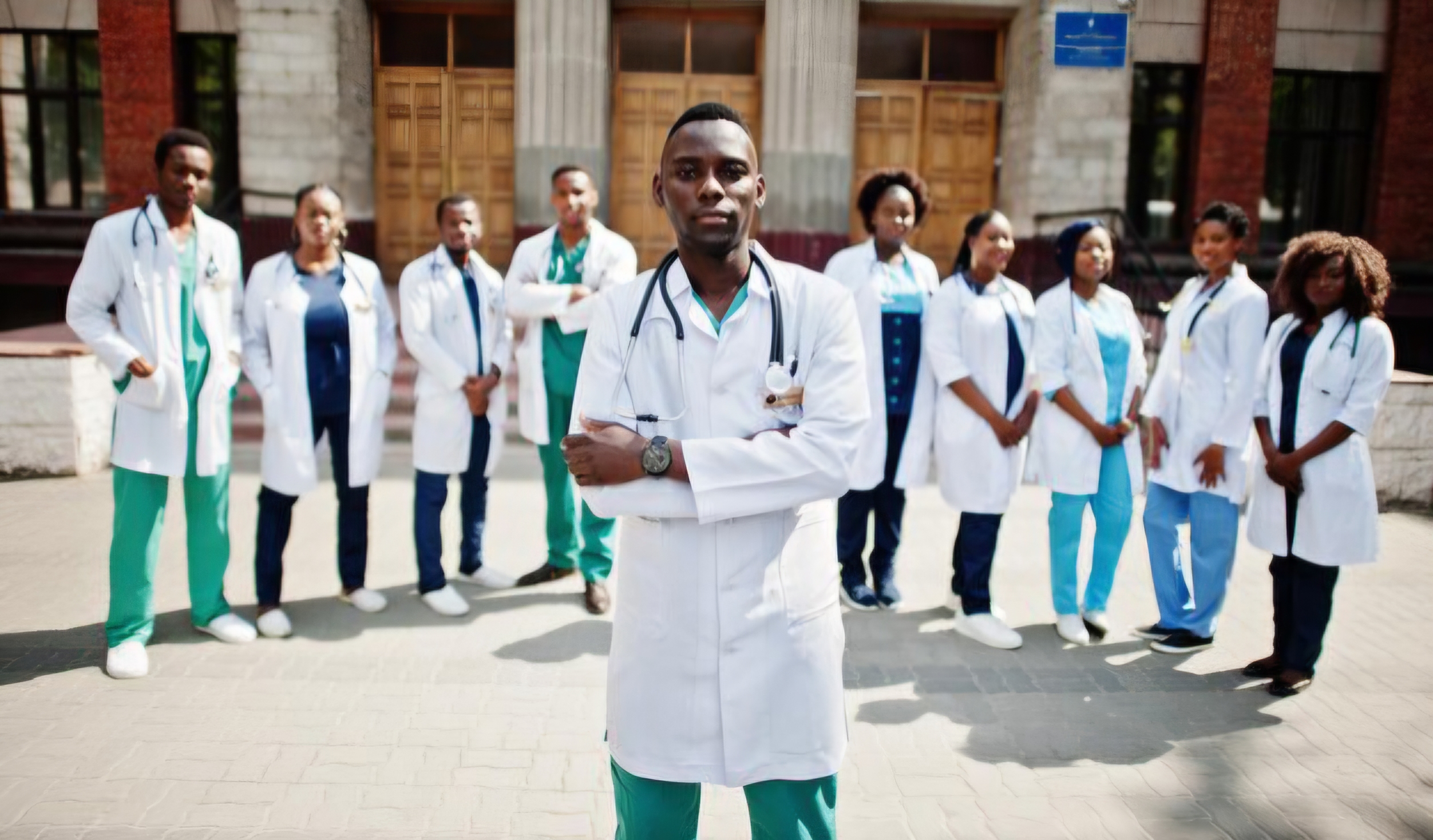
In our class of 76 MBBS students, about 25 are from Jigawa State, while 51 (68 percent) come from outside the state, which is a normal admission criterion in a public federal university in Nigeria. An appreciable proportion of those 68 percent have transited through private education at either nursery, primary, or secondary level.
Even among the 25 students from Jigawa State, another proportion had the privilege of a private education at either nursery, primary, or secondary level. Among those who purely attended public schools, a large part came from the ultra-top 5 public schools in the state: Academy for the Gifted and Talented Bamaina, Science Secondary School Kafin-Hausa and Gumel, Dutse Model International, Government Girls Secondary School Jahun, and Taura.
These ultra-top public schools have an entirely different model of education and standard. Entry requires a special Common Entrance Examination. They were referred to as Science Board Schools, a replica of the two famous Dawaki’s (Dawakin Kudu/Dawakin Tofa). Their standard levelled those of the private schools, with special tutors rotated amongst themselves, and a better living condition enabling for studies.
From this survey, you can conclude the role that private schools played in producing the right candidates for high-demand university courses in Nigeria, like Medicine, Engineering, and Law, where public schools are no longer capable of filling the gap. If you were not opportune to be from those private or model public schools, your chances of scaling through to read high-demand courses are very low.
In such exotic professions, people coming from my type of public secondary school (Government College Birninkudu) are the 1 percent. Even for that 1 percent chance, I had to spend more than 7 years reconstructing and rediscovering, and finally, with God’s assistance, I got a chance. It’s very difficult to get direct admission right from secondary school. This is not just my story, but the story of thousands from those types of public institutions.
In my graduation year 2009, out of a population of more than 1,000 students, only 2 got admission to read MBBS, and less than 15 got direct university admission that year. Not more than 30 got into professional courses like Engineering, Accounting, Quantity Surveying, Pharmacy, Software Engineering, or Law up to this day.
The question is: what is the fate of other students from more than a hundred other public secondary schools who were not opportune to secure admission into the top universities across the country? They ended up giving up studying or taking courses that do not absolutely add up to their individual or national economic growth.
This trend is similar in 2009 as in 2026, and similar across the entire country. Students ended up studying courses they neither willingly chose nor enjoy. The end result is a waste of talent, for there is no way you can be outstanding in any work or field that you lack passion for. The fault was not entirely theirs, for they love to study, but were either bereft of the orientation, skills, and adequate knowledge to compete amongst their peers from private schools during university entrance examinations.
The difference lies not just in the disparity in financing efforts but in the commitment rendered. There are public schools that received more than many private institutions in terms of staff salaries, overhead, and a larger number of staff. But still, that will not amount to any significant change. The majority of the ruling class have their children in private schools, so it’s easy to understand the lack of commitment.
The system barely rewards excellence. Hardworking and brilliant teachers who further their studies to earn a Master’s or PhD never return but search for other high-paying jobs. These were automatically replaced by less deserving teachers or teachers without the same energy and enthusiasm, hence the continuous drop in teaching standard.
Most of those students are hardworking and willing to escape the poverty surrounding them. But hard work is not enough here; they need a compass, direction, and tools, which were mostly absent or inadequate in those public-run facilities.
The cancer is not just in secondary school education. The problems of our tertiary institutions are mostly their failure to translate the knowledge imparted into direct national development. Some institutions are more consumers than producers. Graduates should be equipped with the right skills to help them become productive in their societies.
Graduates ending up taking jobs that even their peers who have not attended any college were doing is quite frightening. That only leads to a more derogatory look at the system and the continuous boycott and out-of-school population.
So many courses are now obsolete without any relevance to the fast-changing world labour market. Even the so-called professional courses are now taught in a manner so old-fashioned that immediately after graduation, the students lose their relevance and go into confusion.
The courses should be taught in a way that reflects the current situation of the world. We should move with technology. We need to move fast with the speed of this dynamic generation. While paper and pencils are still relevant to us, the world has moved long ago into Artificial Intelligence (AI), wireless, cloud, virtual reality, and genomics.
I still wonder why universities as large as Ahmadu Bello University Zaria, University of Lagos, University of Ibadan, and University of Nigeria Nsukka, with their large population and billions of government allocations, are still spending millions to generate electric power despite having established faculties of engineering and renowned professors and brilliant students.
We produce thousands of graduates in Agriculture, some with first-class grades, but rest assured, any GMO crops with high yield potential seen in this country must have come from either Brazil, Argentina, Thailand, China, or the US.
This is a story of first-generation universities, talk less of the third-generation universities, state-owned colleges, and polytechnics.
We should have a national priority like in India, where the majority of their students pursue degrees in Engineering, Computer Science, or Medicine/Pharmacy. That’s the only way to rapid economic growth. Subsidies, stipends, and scholarships should be attached to those courses to attract youth.
In Nigeria, we should prioritise Engineering, Computer Science, and Agriculture more than even Medicine and Law degrees. Production and creativity are the only solutions to our poverty and alarming population growth. I’m not advocating a total boycott of other courses, but there must be a target where a large part of the candidates are appropriated to read certain disciplines.
The reason I prioritise Engineering over Medicine is because of the entitlement mentality many Nigerians have, ending up studying medical courses just for the ready-made job opportunity without the passion or vision to contribute to national development.
Producing more doctors may not guarantee a rise in national gross domestic product (GDP), but surely a country with more productive engineers will translate into production, less unemployment, low crime rates, increased well-being, less malnutrition, and even fewer diseases.
China and Russia are living examples of the wonders engineering can do for a country. I’m not promoting any profession over another; I’m talking of national economic growth, numbers, and productivity index.
Some parts of this country already understand this crucial reality. Looking at the Joint Admissions and Matriculation Board (JAMB) results for the past 5 years, the top-scoring candidates with scores above 320 from the South West and South East of this country were mostly from private schools. The most striking fact was that 95 percent were applying to read Software Engineering or Mechatronics at the University of Lagos or University of Ibadan, not the usual MBBS or Pharmacy. That’s the future now!
The most devastating fact is that Arewa (Northern Nigeria) is still battling out-of-school children. Even those in school are better off not being there, for the majority of the students memorised more names of Hausa movie actresses and season films than the Chemistry Periodic Table or quadratic equations!
However, when the poverty index spots us, we start shouting marginalisation and all sorts of victimisation excuses. You can’t grow while continually shifting blame or expecting a change from outside yourself. We need rigorous introspection.
It’s not all without hope. Some examples highlight the feasibility of improving the system. States like Yobe will produce wonders in the next 25 years.
Their consistent sound educational policies have already started yielding positive outcomes. Other willing states in the country, especially in the North, should copy similar approaches. Their approach to sponsoring brilliant young minds to prestigious colleges and other key interventions is quite rewarding in the long term.
*Saifullahi Attahir*, is the President, National Association of Jigawa State Medical Students (NAJIMS), National Body.
Writes from Federal University Dutse.
saifullahiattahir93@gmail.com
