

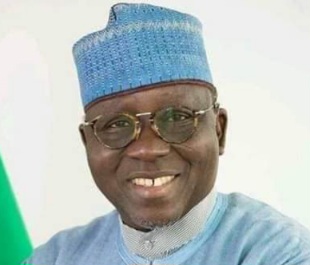
By Senator Umaru Tanko Al-Makura
When I look back at the journey of my life, I see more than political offices, business ventures, public appointments and recognitions. I see a life shaped by education, hard work, faith, enterprise, public service, relationships and, above all, a deep sense of responsibility to people and institutions.
I was born on November 15, 1952, in Lafia, in what is today Nasarawa State, Nigeria.
My early years were shaped by education and the values of discipline, service and perseverance. I attended Dunama Primary School, Lafia, from 1959 to 1966, before proceeding to Government Teachers’ College, Keffi, where I studied from 1967 to 1971. I later attended the College of Education, Uyo, between 1972 and 1975.
My educational journey eventually took me to Ahmadu Bello University, Zaria, where I obtained a Bachelor of Education degree in 1978, specialising in Social Studies.
Education has always occupied an important place in my life. Long before politics, business or public office became part of my story, I understood the power of education to transform an individual and, ultimately, society.
That understanding has remained with me throughout my journey.
THE EARLY YEARS
My first professional experiences were not in politics.
After university, I undertook my National Youth Service at Government College, Makurdi, where I served as a teacher. Teaching gave me an early understanding of responsibility. A teacher does not simply transfer knowledge; a teacher contributes to the formation of young people and, in doing so, participates in shaping the future.
For a brief period, I also worked in broadcasting as an Assistant Producer in News and Current Affairs with the then Broadcasting Corporation of Northern Nigeria.
That experience introduced me to another important dimension of public life: communication. It taught me the importance of information, public awareness and the responsibility that comes with communicating with society.
BUILDING A BUSINESS CAREER
In 1978, I established Al-Makura Nigeria Limited. The company was involved in civil and building engineering activities, as well as the importation, sale and servicing of agricultural and industrial machinery.
My entry into business was driven by the belief that enterprise is another form of service.
A business does not exist only to generate profit. It can create employment, provide useful products and services, develop skills and contribute to the economic life of a community.
Over time, my interests expanded into real estate and property development through Ta’al Nigeria Limited. My business activities have included investments in property and hospitality, with interests associated with Abuja, Lagos, Kano and Lafia, as well as business interests outside Nigeria.
The private sector taught me lessons that later became useful in public administration.
I learnt the importance of planning. I learnt that resources are limited and must be managed responsibly. I learnt that ideas must eventually be translated into practical results. And I learnt that leadership requires people to trust you with resources, responsibilities and expectations.
THE BEGINNING OF MY POLITICAL JOURNEY
My involvement in politics began long before I occupied any elected office.
In 1980, I became the Youth Leader of the National Party of Nigeria in the old Plateau State. At that stage, politics was already teaching me that public service involves people with different backgrounds, interests and expectations.
I later participated in the political transition of the late 1980s and was elected to the Constituent Assembly of 1988–1989, representing the Lafia-Obi Federal Constituency of the then Plateau State.
Between 1990 and 1992, I served as State Secretary of the National Republican Convention in the old Plateau State.
In 1998, I was also involved in the formation of the Peoples Democratic Party in Nasarawa State.
These experiences exposed me to different phases of Nigeria’s political development and deepened my understanding of democratic participation.
Politics, I came to understand, is not simply about winning elections. It is about understanding people, negotiating differences, making decisions that affect communities and accepting that public office carries responsibilities that extend beyond the individual who occupies it.
THE JOURNEY TO THE GOVERNORSHIP
My journey to the governorship of Nasarawa State was shaped by years of political and professional experience.
In 2011, I contested the governorship of Nasarawa State on the platform of the Congress for Progressive Change. I was elected governor and assumed office on May 29, 2011.
I served as Governor of Nasarawa State for two terms, from 2011 to 2019.
Those eight years constituted one of the most demanding chapters of my life.
Governance is very different from campaigning. During a campaign, people listen to promises and plans. In government, those plans have to be translated into policies, budgets, institutions and physical projects.
Every decision has consequences. Every resource has competing demands. Every policy affects real people.
My administration focused on areas including infrastructure, education, healthcare, agriculture, wealth creation, employment and institutional development. Projects were undertaken in roads, education, healthcare and other areas of public infrastructure across the state.
But beyond the projects themselves, the experience taught me the weight of executive responsibility.
EDUCATION AND HUMAN CAPITAL
Because I began my professional life as a teacher, education remained particularly important to me.
I have always believed that the development of a state cannot be separated from the development of its people.
During my tenure as governor, the state supported a number of educational initiatives. Among them was the development of the Ta’al Model School in Lafia, which was commissioned in 2013. My administration also stated that it had commenced the construction of special schools for children with disabilities and expanded technical and vocational education opportunities.
The state also supported the development of Federal University, Lafia. Among the interventions reported during my administration were the provision of land for the university’s permanent site, infrastructure support and the construction of roads within the university environment.
These experiences reinforced something I had learnt many years earlier as a teacher: if we want to change society, we must invest in people.
Buildings are important. Roads are important. Hospitals are important.
But the most important resource of any society remains its people.
INFRASTRUCTURE AND DEVELOPMENT
Infrastructure was another major component of my administration.
Roads connect communities. Markets connect producers and consumers. Hospitals provide access to healthcare. Schools create opportunities. Public institutions provide the structures through which government serves citizens.
During my eight years in office, my administration undertook projects involving township roads, rural roads and other public infrastructure across the state. Road construction and rehabilitation projects were undertaken in several local government areas.
Towards the end of my tenure, several major projects were commissioned, including the new state High Court headquarters and an expanded complex of the Dalhatu Araf Specialist Hospital in Lafia. The hospital expansion was intended to increase its capacity and reduce the need for referrals for some medical cases.
I understood that development is not achieved through one project. It is achieved through a combination of institutions, infrastructure, human capital and sound administration.
LEARNING THE RESPONSIBILITIES OF GOVERNANCE
My years as governor also taught me that public leadership comes with difficult choices.
A governor must listen to competing interests. A governor must work with the legislature. A governor must work with local governments, traditional institutions, civil servants, businesses, communities and development partners.
There will always be disagreement. There will always be criticism. There will always be expectations that cannot all be met at the same time.
Leadership therefore requires patience, consultation and the willingness to make decisions while understanding their consequences.
One of the lessons I carried away from those eight years is that public office is temporary.
The office belongs to the people.
The individual merely occupies it for a period of time.
THE POLITICAL TRANSITION
My years in government also coincided with an important period in Nigeria’s political development.
I participated in political discussions and activities that contributed to the wider realignment of opposition politics, which eventually led to the formation of the All Progressives Congress in 2013.
For me, the larger lesson was that democratic politics requires dialogue and the ability of different political interests to find areas of common purpose.
Political parties may change. Political circumstances may change.
But the responsibility to the people remains.
MY YEARS IN THE SENATE
After completing my two terms as governor, my journey in public service continued.
In 2019, I was elected to represent Nasarawa South Senatorial District in the National Assembly. I served in the Senate from 2019 to 2023.
The Senate provided a different perspective from executive government.
As governor, I was directly involved in the administration of a state. As a senator, my responsibilities were part of a larger national legislative institution.
The experience gave me an opportunity to look at national issues from a broader perspective and to participate in discussions concerning legislation, representation and national development.
It also reminded me that Nigeria is a country of enormous diversity.
What may appear straightforward from one part of the country may look very different from another.
Effective public service therefore requires listening.
SERVICE BEYOND ELECTIVE OFFICE
Leaving elective office did not mean leaving public service.
My experience in education, business and government has continued to bring me into national conversations about development and institution-building.
In July 2025, I was appointed Chairman of the Governing Board of the Universal Basic Education Commission, UBEC.
The appointment brought my journey back to one of the fields with which I began my working life: education.
As Chairman of the UBEC Board, I have expressed a commitment to strengthening basic education and using my background as a trained teacher and public servant to contribute to the development of the sector.
In December 2025, the Federal Government confirmed the constitution of the UBEC Board, with me continuing as Chairman for a four-year term in the first instance.
Returning to education in this way has a special meaning for me.
I began as a student.
I became a teacher.
I entered business.
I became involved in politics.
I served in the legislature.
I became governor.
And today, I have again found myself serving in an institution whose work is fundamentally about giving Nigerian children opportunities through education.
Life sometimes brings us back to where we began, but with a much wider understanding of responsibility.
BUSINESS, ENTERPRISE AND PHILANTHROPY
My journey through business has remained an important part of my identity.
I have always believed that government alone cannot create all the opportunities required by society. The private sector has a critical role to play.
Entrepreneurs create businesses. Businesses create jobs. Investment develops communities. Responsible enterprise can complement public institutions in addressing social and economic needs.
My experience across machinery, construction, property development and hospitality has therefore influenced the way I think about development.
I have seen the importance of capital. I have seen the importance of skilled people. I have seen the importance of planning.
And I have seen that an idea can only become meaningful when it is translated into something that people can use.
THE IMPORTANCE OF PEOPLE
One of the greatest lessons of my journey is that no achievement is accomplished alone.
Behind every institution are people.
Behind every business are employees, partners and customers.
Behind every political office are citizens.
Behind every public project are professionals, administrators and workers.
And behind every successful person are teachers, parents, friends, colleagues and people who provided opportunities at important moments.
I therefore do not look at my journey only through the positions I have occupied.
I look at it through the people I have encountered and the relationships that have shaped my understanding of service.
LEADERSHIP AND RESPONSIBILITY
Leadership has taught me many things.
I have learnt that authority and responsibility must go together.
I have learnt that public resources must be treated as a trust.
I have learnt that institutions are more important than individuals.
I have learnt that development takes time.
I have learnt that criticism is part of public life.
And I have learnt that a leader must be prepared to listen, even when the message is difficult to hear.
No leader can satisfy everyone.
But every leader can choose to approach responsibility with seriousness and an understanding that decisions made in public office affect real lives.
MY ROOTS AND MY IDENTITY
I was born in Lafia, and my journey has remained closely connected to Nasarawa State.
My experiences have also taken me to different parts of Nigeria and beyond.
I have worked in education. I have worked in business. I have worked in media. I have served in politics. I have participated in legislative and executive government.
Each environment has contributed something different to my understanding of Nigeria.
Our country is diverse, and that diversity should be understood as part of our strength.
The Nigeria I know is a country of different languages, cultures, religions, communities and experiences.
Public leadership therefore requires an ability to understand differences while working towards shared national objectives.
FAMILY AND PERSONAL LIFE
Beyond politics and public responsibilities, I remain a family man.
Family provides the grounding that public life cannot provide. It reminds us that titles are temporary and that relationships are enduring.
The responsibilities of public life can be demanding, but family provides a space where one is known not by an office or title, but simply as a husband, father, brother and relative.
That perspective is important.
It reminds me that every public policy eventually affects families.
Every economic decision affects households.
Every education policy affects children.
Every healthcare decision affects parents and communities.
And every development plan ultimately has meaning only when it improves the lives of people.
WHAT THE JOURNEY HAS TAUGHT ME
My journey has taught me that life rarely follows a straight line.
I began as a student.
I became a teacher.
I worked in broadcasting.
I entered business.
I became involved in politics.
I served in the Constituent Assembly.
I became Governor of Nasarawa State.
I served in the Senate.
And I have returned to the field of education through national public service.
Each chapter prepared me for another.
Education taught me discipline.
Teaching taught me responsibility.
Broadcasting taught me communication.
Business taught me enterprise and resource management.
Politics taught me negotiation and the complexity of public expectations.
Governance taught me responsibility for institutions and people.
The Senate taught me the importance of national representation.
And my current work in basic education continues to remind me that the future of Nigeria depends greatly on the quality of opportunities we create for our children.
THE JOURNEY CONTINUES
When I look back, I do not see a journey that ended with the governorship or the Senate.
I see a continuing journey.
There are still problems to solve. There are still institutions to strengthen. There are still young people who need opportunities. There are still communities that need development. There are still lessons to learn.
My current responsibility in the Universal Basic Education Commission has brought me back to one of the earliest foundations of my professional life: education.
I remain committed to the belief that a child who receives quality education has a better foundation from which to contribute to society.
I remain committed to the importance of enterprise, responsible leadership and institutional development.
And I remain committed to the idea that public service should be approached as a responsibility rather than merely a privilege.
My story is therefore not simply about the offices I have occupied.
It is about the different opportunities I have had to serve.
It is about the lessons gathered along the way.
It is about the people who have been part of the journey.
And it is about the responsibility that comes with every new chapter.
The journey that began in Lafia many decades ago continues.
And as long as there is still an opportunity to serve, to contribute, to learn and to make a difference, there is still work to be done.
Al-Makura
Former Governor, Nasarawa State
Former Senator, Nasarawa South Senatorial District
Chairman, Governing Board, Universal Basic Education Commission (UBEC)
