

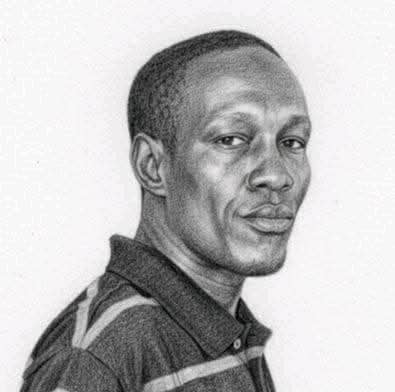
By Adamu Aminu
Kano politics is steeped in theatrical absurdities and rich with lessons drawn from action and counteraction.
It is a political culture shaped by push and pull pragmatism versus idealism marked by advances and reversals. In Hausa expression, this dynamic is aptly described as “Tufka da Warwara” (weaving and unweaving).
At first glance, the preface of this piece may appear somewhat awkward, as the power of its wordplay seems to emerge more clearly in the second paragraph, giving the impression of a mixed or directionless prologue.
Nevertheless, whatever its form, the Kano brand of politics remains a school of thought—one that other states may choose to emulate, for better or for worse.
Recently, the New Nigeria Peoples Party (NNPP) nominated the sons of two late Kano State lawmakers Sa’ad Aminu Sa’ad and Nabil Aliyu Daneji to contest in upcoming bye-elections.
According to the party, this decision was reached unanimously after extensive consultations led by Senator Rabiu Musa Kwankwaso, involving key stakeholders as well as the bereaved families.
The NNPP maintains that the nominations were intended to honour the legacies of the deceased lawmakers.
It also emphasizes that the candidates will still undergo the party’s established screening and selection processes.
Unsurprisingly, the decision has generated mixed reactions.
From one perspective, some observers believe that Senator Rabiu Musa Kwankwaso’s decision was appropriate, arguing that it serves to immortalize the late lawmakers by extending their political legacies through their offspring.
On the other hand, critics contend that the move falls short of democratic ideals.
They argue that the NNPP was not founded on family-and-friends-based political structures. Some have even coined the phrase “democratic nepotism” to describe what they perceive as the party’s current practice.
Their complaint is that there is an abundance of competent and loyal party members—individuals who played instrumental roles in the party’s rise—yet were overlooked for these nominations.
From a personal and dispassionate standpoint, I have examined the issue from multiple angles.
First, the unanimous decision spearheaded by the party’s foremost chieftain, Dr. Rabiu Musa Kwankwaso, can be seen as a form of posthumous reward—an attempt to honour and immortalize the late lawmakers by continuing their unfinished legacies. Undoubtedly, such a gesture is likely to bring comfort and appreciation to the families of the deceased.
However, beyond family ties, one must ask: what credible benchmarks were considered before arriving at this decision?
Second, it is well understood that legislative representation demands political experience, competence, and a solid grasp of governance across various sectors. It is equally known that within the affected local government areas, there are party members who have sacrificed immensely—time, resources, and personal comfort—for the party. Many of them possess the very qualifications required for legislative service, yet they remain sidelined.
Why is this so? Is this not the same party that once accused its predecessors of nepotism?
Party norms and guiding principles are fundamental to the process of selecting candidates and flagbearers. It is assumed that NNPP members are fully aware of the party’s rules and regulations governing candidate selection at all levels of representation.
This raises a critical question: were these regulations overlooked, or was this decision taken deliberately despite them?
In the end, the principles governing life remain constant: the manner in which decisions are made ultimately shapes their outcomes.
I sincerely hope and pray that the souls of the departed lawmakers continue to rest in perfect peace. Amin.
Aminu writes from Kano.
