

By Sa’id Husain Abdullahi (Kwajale-Sumaila)
“And what rough beast, its hour come round at last, / Slouches towards Bethlehem to be born?”
— W. B. Yeats, The Second Coming
In 1919, as the world reeled from the devastation of war, Irish poet W. B. Yeats wrote a haunting vision of a civilization in collapse. A century later, his prophetic lines echo with fresh urgency — not in the trenches of Europe, but in the shattered neighborhoods of Gaza, the blockaded borders of Palestine, and the corridors of Western complicity.
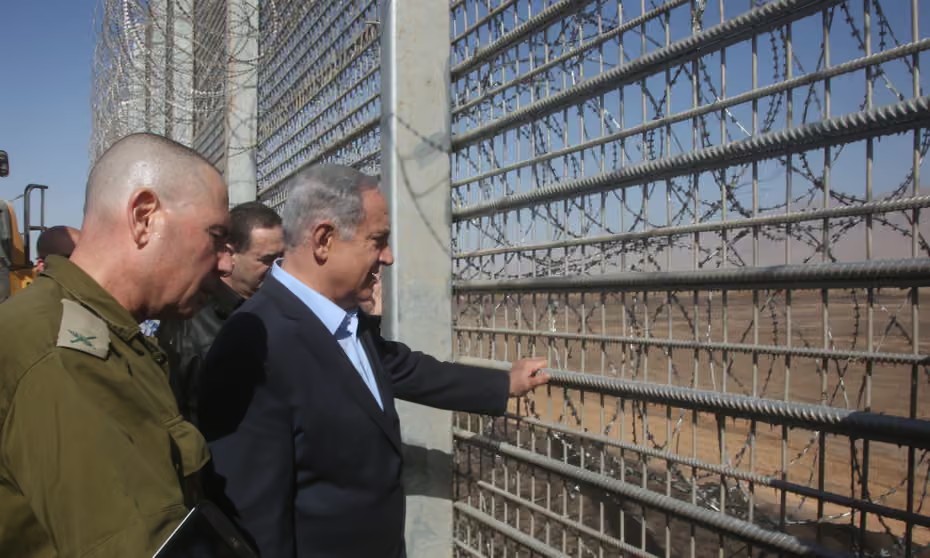
Today, Yeats’ “rough beast” has emerged not from legend, but from realpolitik. Its form is embodied in Benjamin Netanyahu, Prime Minister of Israel, and in the global network of ideological co-travelers who enable and defend state brutality with moral indifference.
A Gaze Blank and Pitiless.
The beast that Yeats feared gazed upon the world “blank and pitiless as the sun.” It saw without compassion. That is what we now see in the relentless bombardment of Palestinian towns and refugee camps. The images are no longer distant. They fill our timelines: flattened homes, orphaned children, burning mosques. The world watches, mostly in silence — or worse, in justification.
Netanyahu’s machine of destruction moves with terrifying precision, all while cloaked in the language of self-defense and divine right. Behind it stand powerful governments, billion-dollar arms deals, and a media narrative that suppresses the oppressed while sanitizing the oppressor.
The Centre Cannot Hold.
Yeats lamented that “the centre cannot hold.” The centre here is not just political balance — it is moral conscience. In a world where Palestinians are massacred without consequence, where international law is applied selectively, and where the cries of the wounded are drowned in diplomatic double-speak, the centre has indeed collapsed.
And what rises to fill that vacuum? Leaders without empathy. Empires without restraint. Societies numbed into inaction. “The best lack all conviction,” Yeats wrote, “while the worst are full of passionate intensity.” That reality is not poetic — it is painfully present.
A Nightmare Born of Cradles.
Yeats envisioned “twenty centuries of stony sleep vexed to nightmare by a rocking cradle.” The cradle here, once symbolic of hope and new life, has become the source of terror. In the birthplace of Christ — Bethlehem, now choked by walls and watchtowers — the Second Coming is not a savior, but a beast.
It is a beast born of occupation, nourished by militarism, and legitimized by the silence of the so-called free world. And every child buried beneath Gaza’s rubble becomes part of this nightmare.
A Call to Conscience.
The question Yeats asked — “What rough beast… slouches towards Bethlehem to be born?” — is no longer theoretical. It is happening before our eyes. And we must ask: Will we let this beast define our age?
It is not enough to mourn. We must speak. We must name injustice. We must reject the selective morality that privileges some lives over others. We must reclaim the centre — a centre of truth, justice, and shared humanity — before it is too late.
🖊️ Sa’id Husain Abdullahi (Kwajale-Sumaila)
can be reached via shabdullahi59@gmail.com.
